LED Grow Lighting for Alberta Greenhouses: Energy Savings and Production Benefits
Alberta greenhouse operations have two compelling reasons to upgrade to LED grow lighting: significant energy savings and measurable production improvements.
Greenhouse lighting is fundamentally different from barn or shop lighting — it's not just about visibility, it's about photosynthesis. The fixtures you choose directly affect how your crops grow, not just how your electricity bill looks. Alberta greenhouse operators upgrading to LED grow lighting are finding that the economics are compelling on both dimensions: energy costs fall significantly, and production results improve measurably.
What Makes Greenhouse LED Different
Standard LED fixtures are optimized for human vision — the visible light spectrum that looks bright to our eyes. Grow lighting has to be optimized for plant photosynthesis, which operates on a different principle: Photosynthetically Active Radiation (PAR).
PAR measures light in the wavelength range (400–700 nm) that plants can use for photosynthesis. The metric that matters for greenhouse lighting isn't lumens (brightness perceived by humans) — it's PPFD (Photosynthetic Photon Flux Density), measured in micromoles per square metre per second. A fixture can look bright to the eye but deliver poor PAR efficiency; conversely, a fixture with a specific red-blue spectrum might look dim but deliver excellent PAR for plant growth.
Modern horticultural LED fixtures are designed to deliver PAR efficiently, with spectral output tuned to maximize photosynthetic response. Quality greenhouse LEDs typically achieve PAR efficiency of 2.5–3.0+ µmol/J — significantly better than older HPS technology at 1.5–1.8 µmol/J.
Energy Savings: HPS to LED
High-Pressure Sodium (HPS) has been the dominant Alberta greenhouse lighting technology for decades, valued for its high PAR output and reliability. The transition to LED represents a significant energy reduction:
- A 600W HPS fixture typically delivers 1,050–1,100 µmol/s of PAR output
- A quality 400W horticultural LED delivers equivalent or superior PAR output at 400W — a 33% power reduction for the same PAR
- Top-performing 320W LEDs now match or exceed 600W HPS PAR output — a 47% power reduction
For an Alberta greenhouse running supplemental lighting 12–16 hours per day through the winter growing season, this reduction translates directly to significant electricity savings. A 10,000 sq ft greenhouse running 60 HPS fixtures at 600W each:
- Existing load: 60 × 600W = 36 kW lighting load
- Post-LED load: 60 × 340W equivalent = 20.4 kW lighting load
- Reduction: 15.6 kW, running 14 hours/day for 200 days = 43,680 kWh/year
- At $0.18/kWh all-in: approximately $7,860/year in direct energy savings
Fixture cost for 60 quality horticultural LEDs runs $25,000–$40,000 installed, putting payback in the 3–5 year range before grants — and under 3 years with applicable funding.
Production Benefits: 10–20% Yield Improvement
Beyond energy savings, horticultural LED upgrades consistently deliver production improvements that are harder to put a precise number on but are broadly documented in greenhouse research:
- Better spectrum control: LED fixtures can be tuned for specific crop responses — higher blue spectrum promotes compact, vegetative growth; higher red spectrum promotes flowering and fruiting
- Reduced heat output: HPS fixtures radiate significant heat downward onto crops. LED fixtures run cooler, reducing plant stress and allowing fixtures to be positioned closer to the canopy for better light distribution
- Consistent output: LED maintains consistent PAR output over its lifetime; HPS degrades significantly in output over time
- Reduced HVAC load: Less heat from lighting means lower summer cooling costs and better growing-season temperature management
Studies of greenhouse operations transitioning from HPS to quality LED typically report 10–20% yield improvements for tomatoes, cucumbers, and other high-value crops — though results vary significantly by crop type, growing protocol, and fixture choice.
Combined LED and Solar for Alberta Greenhouses
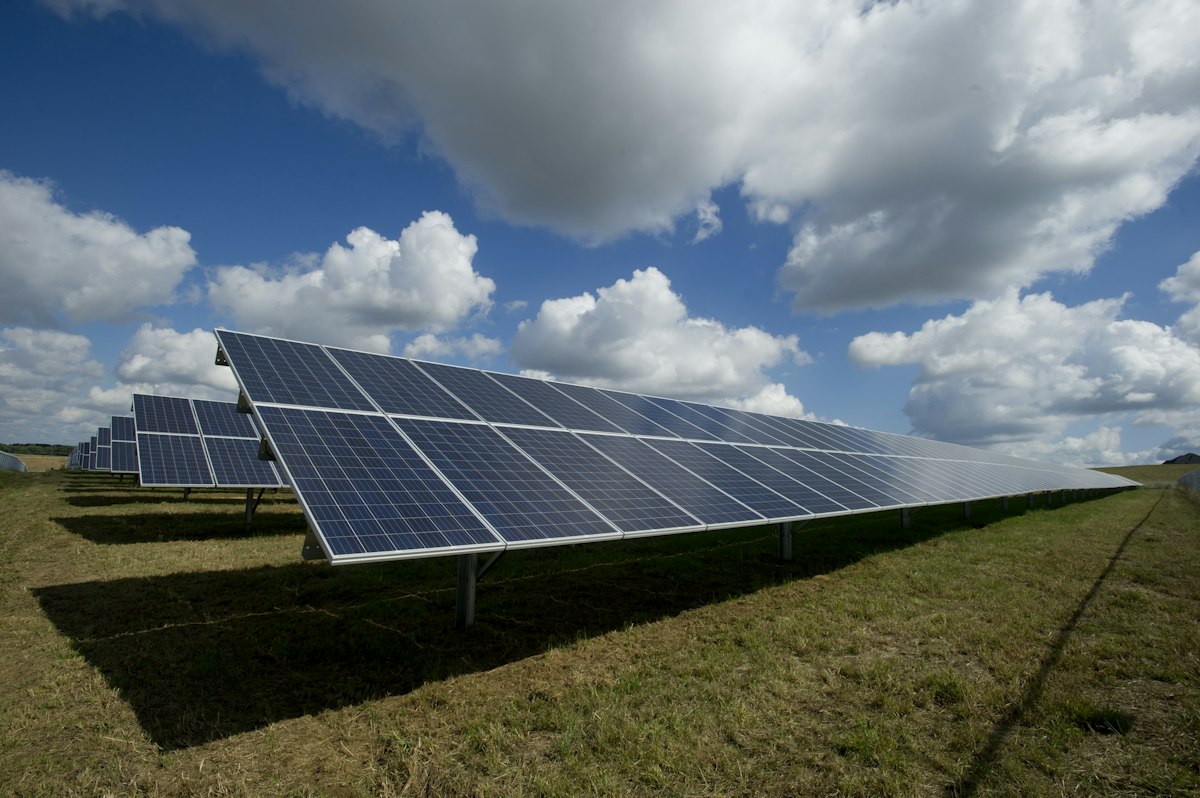
Greenhouses have an interesting solar opportunity: their lighting load is highest in winter (when solar generation is lower), and their operation schedules can include significant daytime energy use that aligns with solar production. The right sequence — LED upgrade first, then solar sized against the post-LED load — applies here as with farm operations.
For greenhouse operators considering both investments, the energy assessment step identifies the full picture: current lighting load, post-LED load, solar generation potential, and the combined ROI of both projects in the right sequence.
Book your free energy assessment here or call 403-608-3750.
Free Energy Assessment
Talk to Darryl White
Rocky View County, Airdrie, Cochrane, Crossfield, Carstairs, and surrounding areas. No commitment — just a clear picture of your energy costs and options.